

The evolution of smart buildings demands more than just cutting-edge devices; it requires a foundational physical infrastructure capable of supporting the next generation of connectivity. As Wi-Fi 7 (802.11be) emerges, promising unprecedented speeds and lower latency, organizations must proactively assess and upgrade their networks to fully harness its potential. B4 Sales LLC understands the critical link between robust infrastructure and seamless digital transformation, empowering businesses to build intelligent environments from the ground up. This shift isn't just about faster internet; it's about enabling a truly integrated, responsive, and efficient built environment.

The Wi-Fi 7 Imperative for Smart Buildings
Wi-Fi 7, also known as Extremely High Throughput (EHT), represents a monumental leap in wireless technology, designed to meet the escalating demands of modern smart buildings. With features like wider channels, 4096-QAM modulation, and multi-link operation, it promises significantly higher speeds, reduced latency, and increased capacity. This is not merely an incremental upgrade; it's a paradigm shift that will enable real-time applications such as AI-powered surveillance, advanced IoT sensors, immersive AR/VR experiences for building management, and high-density user environments without compromising performance. For smart buildings to truly excel, their wireless backbones must be prepared to handle the immense data throughput and stringent reliability requirements that Wi-Fi 7 will introduce.
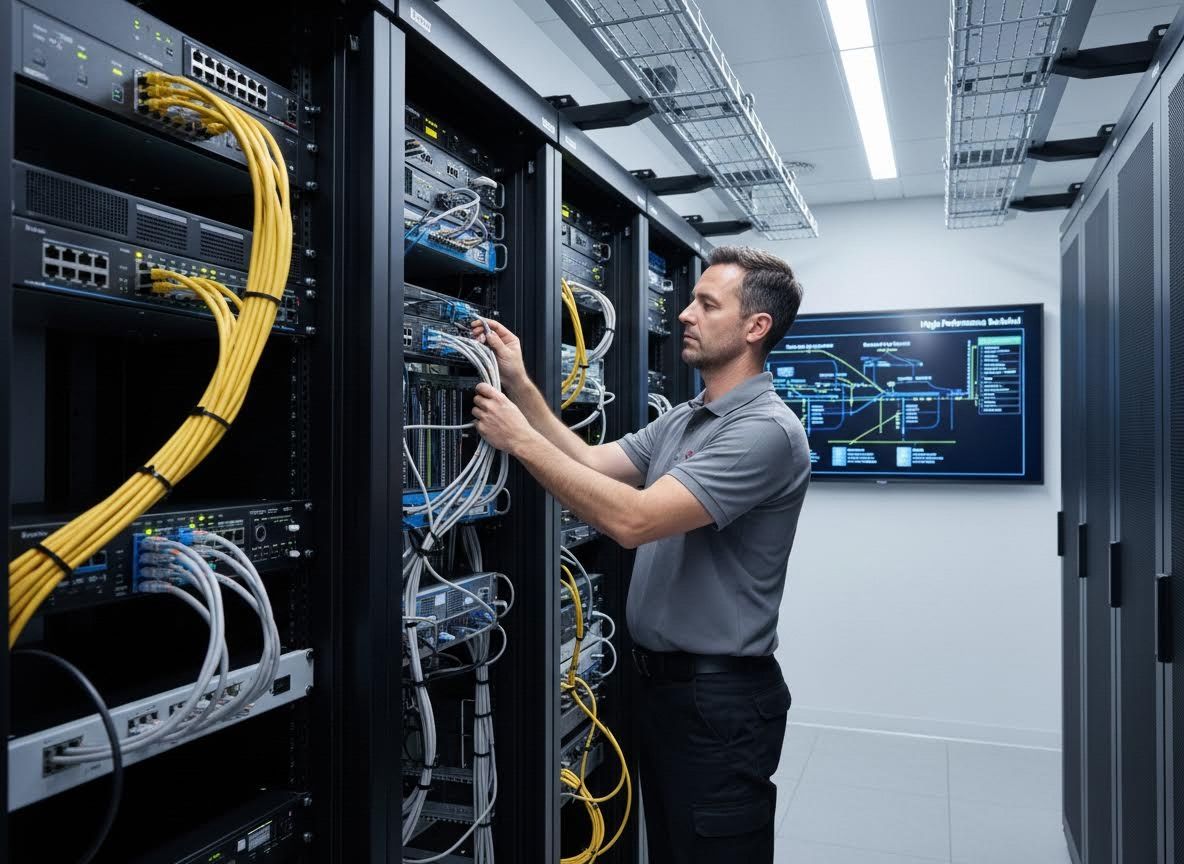
Reinforcing the Foundation: High-Performance Structured Cabling
The promise of Wi-Fi 7 can only be realized if the wired infrastructure supporting it is equally capable. Access points, regardless of their wireless prowess, are only as fast as their backhaul connection to the network. For smart buildings to fully leverage Wi-Fi 7's capabilities, deploying high-performance structured cabling is non-negotiable. This means moving beyond older Category 5e or 6 cabling and investing in Category 6A (Cat6A) or higher, such as Cat7 or Cat8, especially for critical backbone connections. These advanced cables provide the necessary bandwidth and alien crosstalk performance to support multi-gigabit speeds over longer distances, ensuring that data flows freely from access points to switches and ultimately to data centers. Expert installation and adherence to industry standards are paramount to prevent bottlenecks and ensure the long-term reliability of your smart building's network.

Intelligent Power and Network Design for Optimal Performance
Beyond the cabling itself, the design and power delivery of your network are crucial for a future-proof smart building. Power over Ethernet (PoE) technology is essential for deploying Wi-Fi 7 access points and the myriad IoT devices that constitute a smart building, eliminating the need for separate power outlets. With Wi-Fi 7 access points potentially requiring more power, PoE++ (Type 3 and Type 4) capabilities become vital to deliver up to 60W or 90W, respectively. Furthermore, intelligent network design involves strategic placement of access points to ensure ubiquitous coverage and minimal interference, alongside robust network segmentation to enhance security and manage traffic efficiently. Expert guidance in telecommunications and IT ensures that these complex systems are integrated seamlessly, providing a resilient and high-performing network foundation for all smart building applications.
The journey towards truly intelligent buildings powered by Wi-Fi 7 and beyond hinges on a meticulously planned and robust physical infrastructure. Ensuring your cabling, power, and network architecture are up to the task is not merely an upgrade; it's an investment in efficiency, security, and future innovation. B4 Sales LLC has been a trusted partner since 2004, offering the diverse product brands, expert guidance, and innovative solutions needed to empower your connectivity. To explore how to seamlessly integrate the latest network and communication solutions into your smart building strategy, discover more about preparing your infrastructure for tomorrow's demands.